

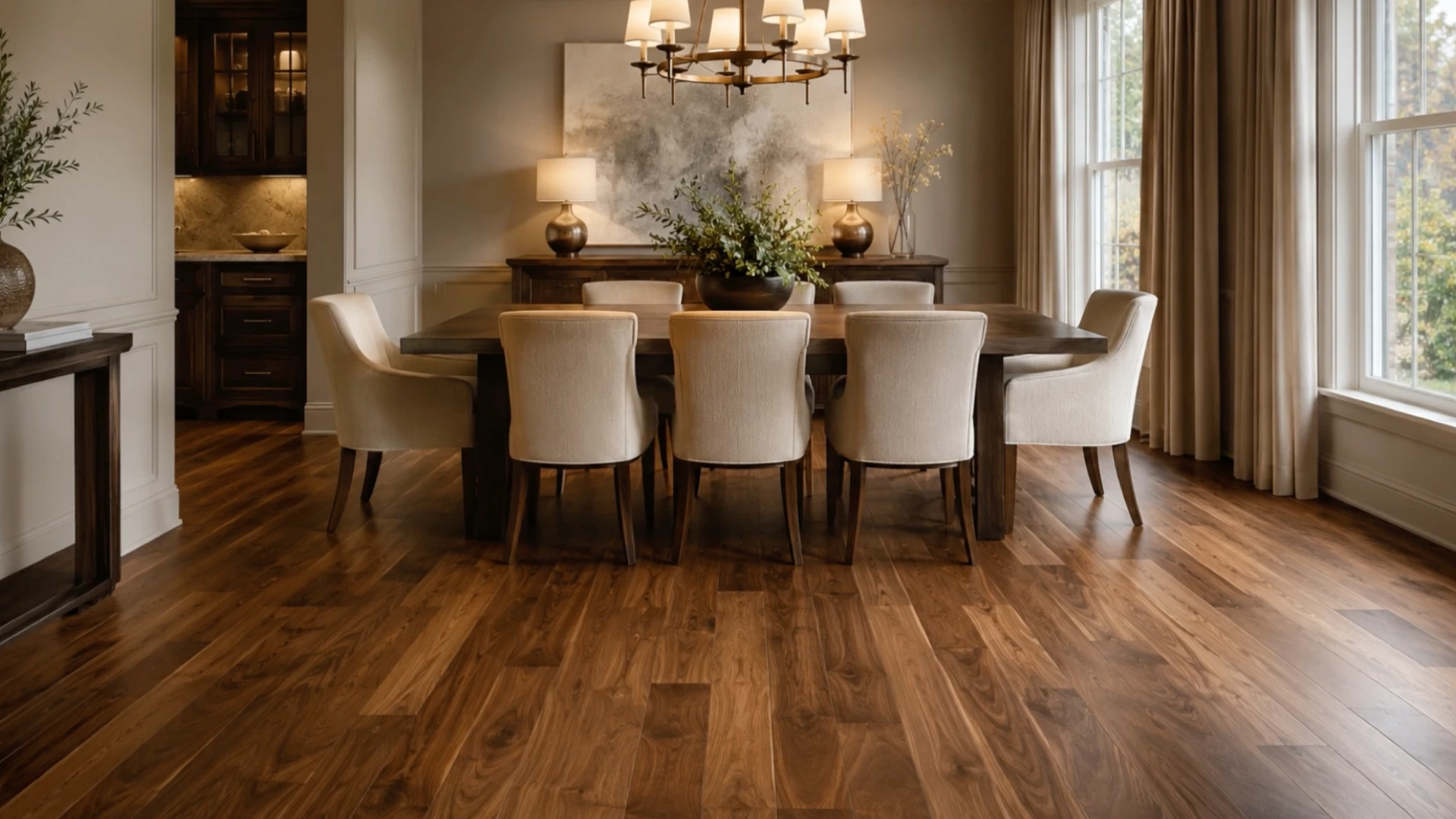
Choosing hardwood is one of the most rewarding decisions you can make for your home. It adds warmth, character, and lasting value to every space. But once the species, color, and plank width are settled, one question tends to catch homeowners by surprise: which direction should the planks actually run?
It may seem like a small detail, yet plank direction shapes how a room feels the moment you walk in. It can make a space feel larger, guide the eye toward a beautiful view, and create a sense of flow from one room to the next. As the flooring experts serving Springfield and southwest Missouri since 1970, we help homeowners think through this exact question every day. Here is a friendly, room-by-room guide to help you get it right.
Why plank direction matters more than you think
Hardwood planks are long and linear by nature, and your eye naturally follows those lines across a room. That simple fact gives plank direction real influence over how a space is experienced.
The right direction can:
Make a narrow room feel wider and a small room feel more open
Draw attention toward a focal point, such as a fireplace, a picture window, or a beautiful backyard view
Create a smooth visual flow between connected rooms and hallways
Complement the architecture of your home rather than fight against it
The wrong direction, on the other hand, can make a room feel choppy, boxed in, or slightly off without anyone quite knowing why. A little planning up front goes a long way.
The general rules for hardwood plank direction
Before we walk through individual rooms, it helps to understand the three guiding principles our installers rely on. Most direction decisions come down to balancing these three factors.
Follow the longest wall
The most common and most flattering approach is to run planks parallel to the longest wall in the room. This lengthens the space visually and creates a clean, uninterrupted look. For the majority of rectangular rooms, this single rule solves the puzzle beautifully.
Follow the light
Running planks in the same direction as the main source of natural light is another classic technique. When boards run toward the primary window, sunlight glides along the length of each plank and highlights the grain instead of catching every seam. The result is a floor that looks seamless and glows in the afternoon.
Follow the floor joists
There is also a structural side to this decision. Solid hardwood is typically installed perpendicular to the floor joists, which gives the flooring maximum stability and prevents sagging or movement over time. This is one reason a professional assessment matters so much, because the framing beneath your feet can influence what is possible. Our team walks through these details with you during any hardwood installation so structure and style are considered together.
When these rules line up, the choice is easy. When they compete, aesthetics and room function usually win out, especially with engineered hardwood, which offers more flexibility than solid planks. You can explore the differences between these options on our hardwood flooring page.
A room-by-room guide to hardwood plank direction
Every room has its own shape, light, and purpose. Here is how to approach the most common spaces in your home.
Living rooms
The living room is usually the heart of the home, so flow and warmth matter most here. Run your planks parallel to the longest wall to make the room feel spacious and inviting. If your living room has a standout feature such as a fireplace or a large window with a view, consider orienting the boards to draw the eye gently toward it. In open living areas, the direction you choose here often sets the tone for the connected spaces.
Bedrooms
Bedrooms tend to be more rectangular than square, which makes them straightforward. Running planks parallel to the longest wall stretches the room and creates a calm, restful feel. In a primary bedroom with large windows, following the light can add a soft, luxurious glow that makes the space feel like a retreat.
Hallways and entryways
Hallways are the one place where direction almost decides itself. Planks should run the length of the hallway, following the path you walk. Running boards across a narrow hallway makes it feel shorter and more cramped, while running them lengthwise draws the eye forward and makes the space feel longer and more graceful. This also creates a natural transition into the rooms that branch off from it.
Kitchens
Kitchens work best when the flooring connects smoothly with the adjoining rooms, so consistency is key. In a galley or rectangular kitchen, run planks along the longest run of cabinets or parallel to the longest wall. If your kitchen opens into a dining or living area, keep the direction continuous across both spaces for a unified, expansive look. Homeowners planning a full refresh often pair new flooring with a kitchen remodeling project so every element comes together at once.
Open-concept spaces
This is where a single rule saves the day. In open floor plans, the golden guideline is to run all the hardwood in the same direction throughout the connected area. Changing direction from one zone to the next breaks up the space and can look unintentional. Pick the direction that suits the longest sightline or the main light source, then carry it consistently across the entire footprint. The payoff is a seamless, elegant space that feels larger than its square footage.
Stairs and transitions
Stairs bring their own considerations, since treads run horizontally by design. Many homeowners choose to complement hardwood stairs with a runner for comfort, safety, and a touch of style. If that appeals to you, take a look at the stair runners options to see how a runner can tie the look together.
What about diagonal and herringbone layouts?
Straight-line installations are timeless, but they are not your only choice. A couple of alternatives can add real personality to the right space.
Diagonal installations run planks at roughly a 45-degree angle. This adds movement and visual interest and can be a clever way to make an awkwardly shaped room feel more dynamic. It does use more material and labor, so plan accordingly.
Herringbone and chevron patterns arrange shorter planks into a woven, zigzag design. These layouts feel elegant and custom, and they shine in entryways, formal spaces, and rooms where you want the floor itself to be a statement.
These patterns are more intricate to install, which makes skilled craftsmanship essential. Browsing a few of our finished projects can help you picture the result. The inspiration gallery and the residential portfolio are great places to gather ideas before you commit.
Common mistakes to avoid
A few simple missteps account for most direction regrets. Keep these in mind as you plan:
Changing direction between connected rooms. This fragments open spaces and rarely looks intentional. Consistency almost always wins.
Running planks across a narrow hallway. It shortens the space and interrupts the natural flow of the home.
Ignoring the main light source. Boards running against the light can emphasize every seam, especially with glossier finishes.
Overlooking the subfloor and joists. With solid hardwood in particular, structure limits your options, so this should be checked before installation day.
Deciding without seeing samples in the room. Light and layout change everything. Viewing planks in your actual space prevents surprises.
Avoiding these pitfalls is easy with a little guidance, and it is exactly the kind of thing our flooring experts are happy to walk through with you.
Ready to get the direction right? Let us help
You do not have to make this decision alone. Our knowledgeable team has spent decades helping homeowners across southwest Missouri choose hardwood that looks stunning and lasts for generations. We will assess your rooms, your light, and your subfloor, then recommend a direction and layout that make your home shine.
Stop by our showroom or contact us to schedule a consultation. We would love to help you bring your vision to life. Our flooring experts can also walk you through our full range of flooring services and support your project from start to finish.
Keeping your new floors beautiful
Once your hardwood is installed and running in exactly the right direction, a little upkeep keeps it looking brand new for years. Simple habits, the right cleaning approach, and a bit of protection go a long way. For practical, floor-friendly tips from our team, visit our hardwood care and maintenance page.
About The Carpet Shoppe
For more than 50 years, we have promised our customers service beyond their expectations, and we are still delivering on that promise today. Since 1970, we have been one of southwest Missouri's most trusted names in flooring. Our experienced, knowledgeable team thrives on providing service that exceeds expectations at every touch point, maximizes the value of every purchase, and ensures each customer's flooring needs are met, from durability to trend-forward style.
Based in Springfield and proudly serving Ozark, Nixa, Branson, and Republic, we offer carpet, hardwood, laminate, tile, luxury vinyl, area rugs, and more, along with expert installation and remodeling services. We also provide an easy-to-understand warranty system that gives you a solid level of protection. Learn more about us and discover why generations of Missouri homeowners have trusted The Carpet Shoppe with their floors.

