

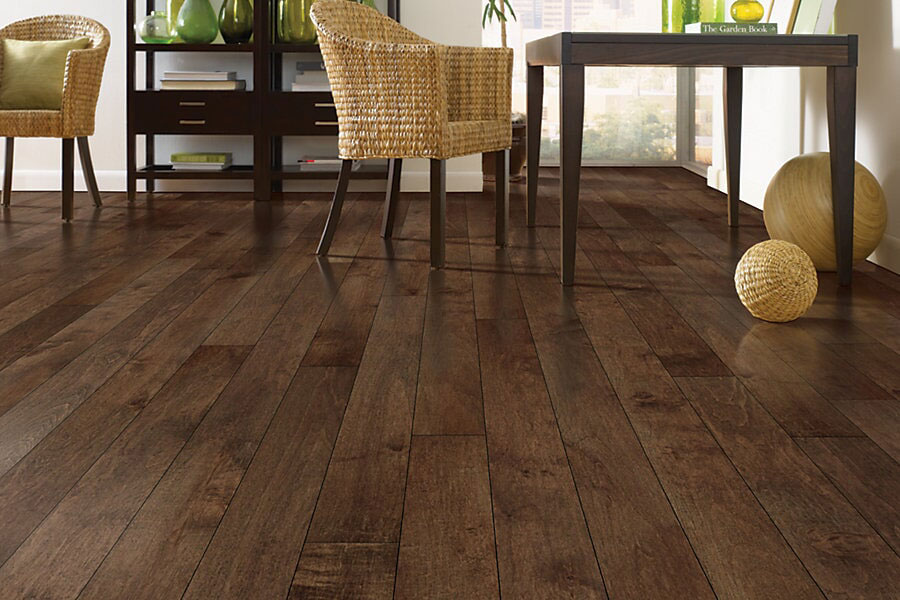
Walnut hardwood has a way of quieting a room the moment it goes down. The deep chocolate tones, the soft shimmer under afternoon light, the grain that swirls like brushstrokes across each plank, it all adds up to a floor that feels less like a finish and more like a feature. Homeowners who choose walnut tend to keep it for decades, and once you live with it for a while, you understand exactly why.
We at The Carpet Shoppe have been guiding families across Springfield, Ozark, Nixa, Branson, and Republic, MO toward floors that age gracefully for over fifty years. Walnut comes up often in our showroom, especially with homeowners who want something warm, sophisticated, and a little different from the usual oak. If you are weighing your options, this is a species worth slowing down for.
What makes walnut feel so different from other hardwoods
Walnut is a softer hardwood than oak or hickory, which sounds like a drawback until you stand on it. The give underfoot makes it remarkably comfortable in spaces where you spend long hours, and the lower density means it accepts stains and finishes beautifully. Each plank tends to carry a story in its grain, with cathedral patterns, knots, and color variation that no two boards repeat exactly.
Color is where walnut really earns its reputation. The heartwood ranges from rich chocolate to a smoky purple-brown, often softening into honey-toned sapwood at the edges. Over time, walnut gently lightens with sun exposure, settling into a mellow amber tone that looks even better with age.
Where walnut hardwood fits best in a home
Walnut shines in rooms where you want presence without shouting. Living rooms, formal dining rooms, primary bedrooms, and home offices are natural fits because the wood reads as warm and grounded rather than bright or busy. Pair it with cream walls and brass fixtures and the whole space feels curated. Pair it with deep greens or moody blues and it turns into something out of a design magazine.
Hallways and stair landings also benefit from walnut, since the rich color hides minor wear better than pale species. Our hardwood flooring selection includes both solid and engineered walnut, which means you can use it on upper floors as well as below grade where moisture conditions allow.
Solid versus engineered walnut, and how to choose
Solid walnut is milled from a single piece of wood and can be sanded and refinished multiple times, which makes it a true generational floor. Engineered walnut layers a real walnut veneer over a stable plywood core, which gives it better resistance to humidity swings and makes it suitable for a wider range of subfloors.
If you have radiant heat, a basement project, or a home that sees big seasonal humidity changes, engineered is usually the smarter choice. If you are restoring a classic Springfield home and want the floor to outlive the mortgage, solid walnut is hard to beat.
Best practices to remember before you commit
A few things tend to separate a great walnut floor from a frustrating one. We share these with every customer who walks into our showroom curious about the species.
- Acclimate the planks in your home for at least five to seven days before installation, since walnut responds quickly to humidity changes.
- Keep your indoor humidity between 35 and 55 percent year-round to prevent gapping in winter and cupping in summer.
- Use felt pads on every piece of furniture, because walnut is softer than oak and shows dents more readily.
- Choose a satin or matte finish over high gloss, which tends to highlight every scratch on darker wood.
- Trust professional installation for a floor at this price point, because nail patterns, expansion gaps, and subfloor prep all matter more with walnut than with harder species.
Caring for walnut so it ages beautifully
Day-to-day care is genuinely simple. Sweep or dust mop a few times a week, clean spills as soon as they happen, and use a manufacturer-approved hardwood cleaner rather than water and vinegar. Avoid steam mops entirely, since the heat and moisture combination is the fastest way to damage any hardwood floor.
Place rugs in entryways and high-traffic zones, and rearrange furniture occasionally so the patina develops evenly. With reasonable care, walnut floors routinely look stunning thirty and forty years after installation.
Come walk on walnut in our showroom
Pictures only get walnut so far, and the grain truly comes alive when you see it underfoot in person. Stop by and let our team show you the species side by side with oak, hickory, and maple so you can feel the difference for yourself. You can also start by getting to know our team before your visit, and we will help you map out the right fit for your home and timeline.

