

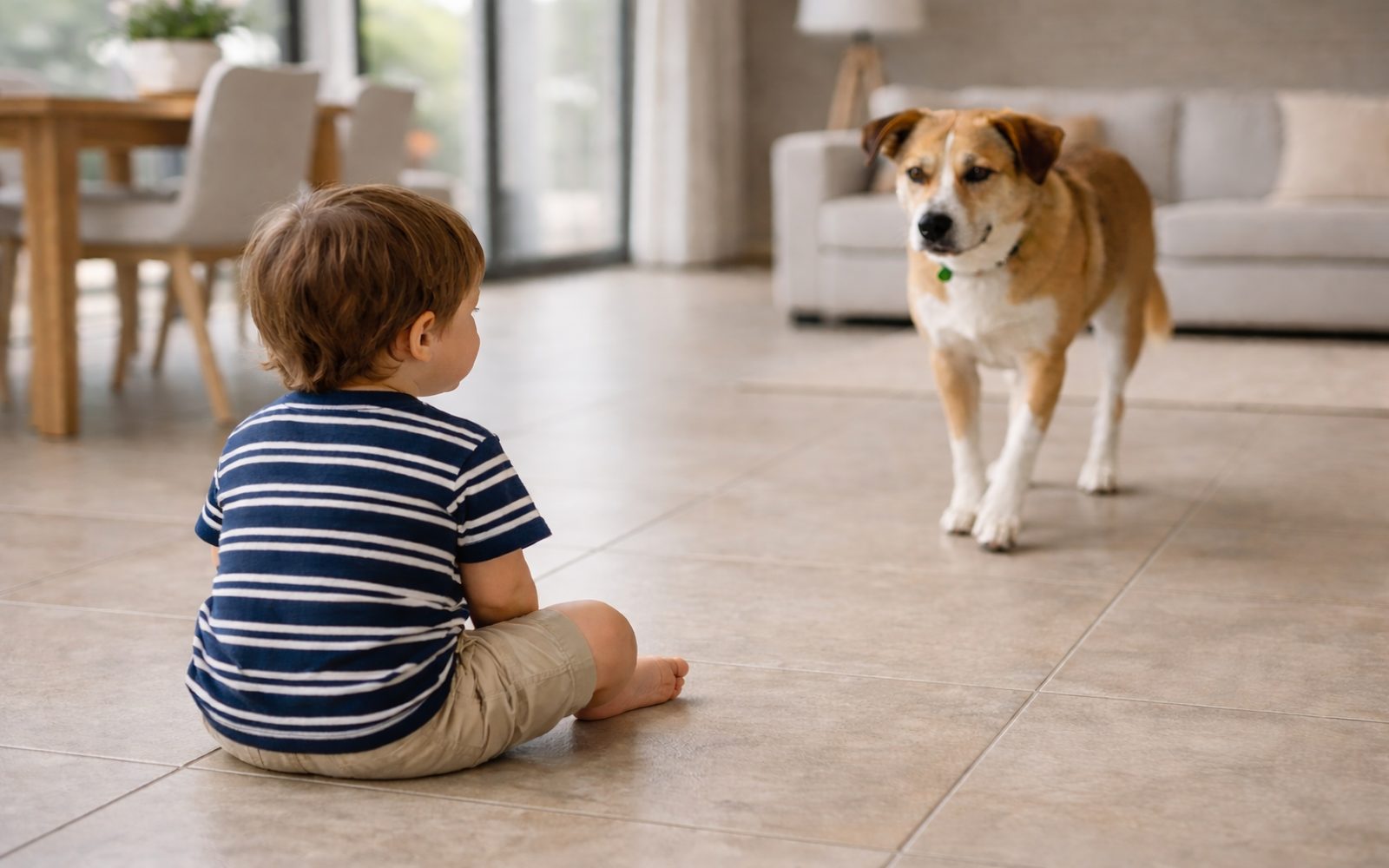
Running, playing, chasing, grabbing toys and snacks — daily life in homes with children and pets is active and full of movement. Tile flooring is popular for its durability and style, but if slip resistance isn’t considered, beautiful floors can become a safety hazard. Understanding tile slip ratings helps families choose floors that look great and protect little feet and paws.
Why slip resistance matters more than looks
It’s tempting to pick tiles based on color and pattern, but smooth, glossy tiles that look stunning in photos can be dangerously slick in real life — especially near sinks, bathtubs, and entryways. Water, spills, and tracked-in moisture all reduce traction. That’s why knowing slip resistance ratings matters for families with kids and pets.
If curious about how tile compares to other flooring types in everyday family spaces, check out our guide on best flooring for kids and pets.
What is a slip rating?
Slip ratings are standardized values that indicate how much traction a tile surface offers. They help predict how likely a surface is to cause slips — especially when wet.
Coefficient of Friction (COF)
COF values measure traction numerically, often expressed like 0.60 or 0.65. Higher numbers mean better grip. For areas that might get wet — like kitchens or bathrooms — we generally look for a COF of at least 0.60.
R-ratings (R9 to R13)
Used mainly in Europe and commercial design, R-ratings range from R9 (lowest traction) to R13 (highest traction). For residential wet areas, R10 or above is commonly recommended. While not all tiles use R-ratings, they can be valuable when specified.
For more on choosing the right texture and finish, see our piece on tile finish options for everyday life.
Wet surfaces change everything
Slip resistance when dry can be very different from when a floor is wet. Many tiles with a smooth finish perform reasonably well when dry but lose traction as soon as water hits them.
In homes with kids and pets, wet conditions are frequent — spilled drinks, bath time splashes, pet water bowls, rainy shoes by the door. That’s why we always consider wet COF values as a top priority.
Tile surface and traction
Tile texture plays a big role in traction and safety. Here’s how surface choices impact everyday use:
Polished tiles
Polished tiles are smooth and shiny, making them stunning in living rooms or low-moisture hallways. But their polished surface can be slick with water — not ideal for areas near bathrooms or entrances.
Matte or textured tiles
Matte and lightly textured tiles diffuse light and add grip. Tiny grooves or patterns give shoes and paws more to hold onto. For homes with children and pets, these tiles often strike the best balance between safety and design.
Wood-look tiles
Wood-look porcelain tile mimics real wood but adds durability and easy maintenance. Many of these tiles also offer texture, which improves slip resistance while giving a warm, natural look.
If design inspiration is the goal, explore our tile ideas in 2026 tile trends for family homes.
Choosing slip ratings by space
Different areas of the home have different needs.
Bathrooms and laundry rooms: High moisture makes higher COF or R-ratings a must.
Kitchens: Spills and splashes happen often — textured tiles with strong wet traction help.
Entryways and mudrooms: These see water, snow, and dirt — grip matters.
Living areas: Typically dry, so design can take a stronger lead, but we still recommend moderate traction.
How to read tile specs
When reviewing tile specifications from manufacturers, here’s what to look for:
COF (dry and wet): Look especially for the wet COF number.
R-rating (if provided): R10 and above is better for wet or high-traffic areas.
Finish description: “Matte,” “textured,” “anti-slip” — these terms help clue you into surface traction.
Tile size and grout: Smaller tiles mean more grout lines, which can add traction underfoot.
We also recommend regular sealing of grout lines — it keeps moisture from penetrating and helps maintain traction over time.
Tips that boost safety further
Slip resistance ratings are powerful, but pairing them with smart habits increases safety even more:
Place non-slip mats in showers, bathtubs, and next to pet feeding stations.
Use area rugs with non-slip backing in hallways and common play zones.
Keep floors clean and dry — wipe up spills promptly.
Consider rubberized backing pads under lightweight rugs for extra grip.
Everyday life and reliable choices
Choosing tiles with the right slip rating doesn’t mean compromising style. With so many options now available — from stone-look porcelain to warm wood textures — it’s possible to balance beauty with performance.
For busy family homes, we focus on tiles that offer real traction without feeling rough or uncomfortable underfoot, while still fitting the aesthetic goals of any space.
For help selecting tile flooring that meets slip-resistance standards and fits the way a household lives, we’re here. At The Carpet Shoppe | (417) 473-2285, we help families make confident flooring choices with guidance from true flooring experts — reach out here: contact our team.

