

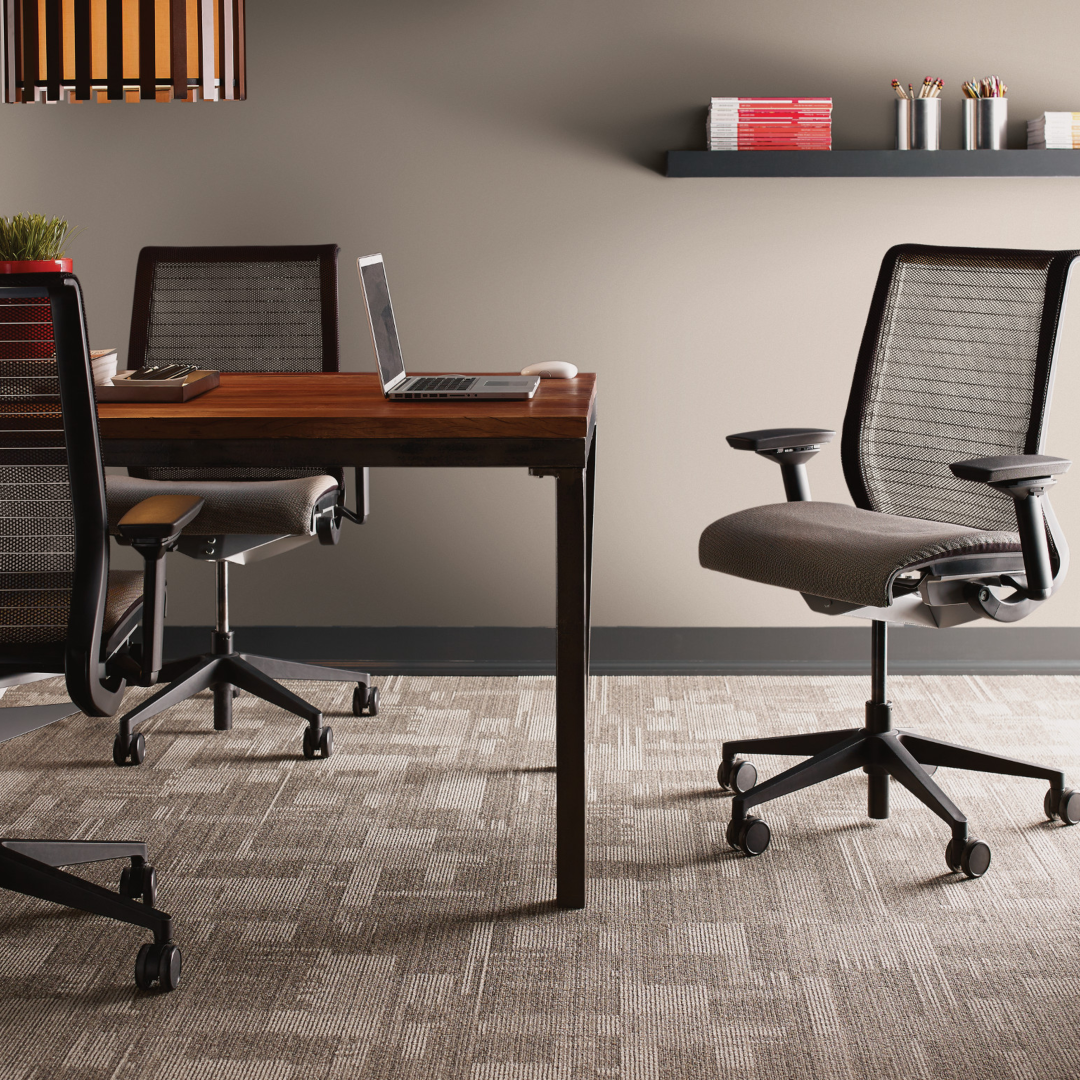
Walk into any thriving Springfield office or boutique on Commercial Street, and the floor underneath your feet is doing more work than most people realize. It absorbs spilled coffee, muddy boots from a January storm, rolling chairs, ladder carts, and the constant rhythm of foot traffic. Choosing between carpet tile and broadloom is one of the first big decisions a business owner faces, and the right answer often depends on how the space actually gets used day to day.
At The Carpet Shoppe, we have helped business owners across Springfield, Ozark, Nixa, Branson, and Republic weigh this exact question for over fifty years. We carry a deep selection of commercial carpet tiles alongside traditional broadloom carpet, so we know firsthand how each performs in real Missouri workplaces. Our goal here is to give you a clear, honest comparison so the decision feels easier when you walk into our showroom.
How carpet tile and broadloom actually differ
Carpet tile, sometimes called carpet squares or modular carpet, comes in pieces typically sized 18 by 18 or 24 by 24 inches. Broadloom is the rolled, wall-to-wall option most people picture when they think of office carpet, usually 12 feet wide and installed as continuous goods.
The difference matters more than it sounds. Tile is modular, replaceable, and forgiving on uneven subfloors. Broadloom delivers a seamless, premium look that softens acoustics and feels uniform across large rooms.
Where carpet tile shines in offices
Open-plan offices, conference rooms, and tech-forward workspaces lean toward tile for good reason. When a chair wheel grinds coffee into one square, your facilities team pops out that single tile and drops in a fresh one from inventory. No patchwork seams, no shutdown, no replacing an entire room.
Tile also handles cabling beautifully. If your office uses raised access floors or frequent IT reconfigurations, lifting individual squares to access wiring is dramatically easier than cutting into broadloom.
Where broadloom still wins for retail
Higher-end retail environments, boutique showrooms, and quiet professional offices like law firms or financial advisors often choose broadloom for one reason: it looks luxurious. The continuous surface reads as polished and intentional, especially in spaces where customers slow down and browse.
Broadloom also tends to feel softer underfoot, which matters in fitting rooms, bridal shops, and waiting areas where people linger.
Practical things to remember before you choose
Every space has its own personality, but a few rules of thumb hold up across nearly every project we install in southwest Missouri. Here is a short checklist we walk our commercial clients through:
- Map your traffic patterns first. High-traffic entry zones and corridors almost always favor carpet tile for easier replacement.
- Think about spills and stains. Restaurants, salons, and medical offices benefit from the swap-one-square advantage of tile.
- Consider your subfloor. Older Springfield buildings with uneven concrete often install tile more cleanly than broadloom.
- Match the look to the brand. Retail boutiques going for warmth and luxury usually prefer broadloom, while modern offices lean modular.
- Plan for the long haul. Order 5 to 10 percent extra tiles up front so future replacements match perfectly even after dye lots change.
Cost, maintenance, and longevity
Tile and broadloom can land in similar price ranges depending on fiber, backing, and brand. The bigger long-term savings with tile come from spot replacement rather than reinstalling an entire room after one bad spill.
Maintenance routines look similar for both. Daily vacuuming, prompt spill response, and a deep clean every twelve to eighteen months keep either option looking sharp for a decade or more, especially when paired with professional flooring installation from a team that prepares the subfloor properly.
A blended approach often works best
Some of our favorite Springfield projects use both. Tile in the high-wear zones near entrances and workstations, broadloom in conference rooms or executive suites where a richer feel sets the tone. There is no rule that says you have to pick one for the entire building.
Talk with our commercial flooring team
We would love to walk through your space and help you choose what fits the way your business actually runs. Stop by our 30,000 square foot Springfield showroom or give us a call, and our team will guide you through samples, durability ratings, and budget options for your commercial flooring needs.

